Back to Guides
Troubleshooting 5 min read Apr 22, 2026
Why Is My Inverter Showing a Ground Fault Error?
A GFDI or ground fault error on your inverter doesn't always mean a major problem — but it does need immediate attention. Here's what it means and what to do.
What Is a Ground Fault?
A ground fault occurs when electrical current flows along an unintended path to ground — usually through damaged cable insulation, a failed panel, or a connection issue. Modern inverters detect this using a Ground Fault Detection and Interruption (GFDI) circuit and shut down automatically to prevent fire or shock hazard.
Common Causes
- Damaged DC cables — UV degradation, rodent chewing, or physical abrasion
- Water ingress — into junction boxes or connectors after heavy rain
- Failed bypass diodes — inside panel cells
- Faulty MC4 connectors — corroded or improperly mated pairs
What To Do
- Don't reset and ignore it. A persistent GFDI trip indicates a real fault that will worsen.
- Note the error code — Different inverter brands (SMA, SolarEdge, Enphase, Growatt) use different codes. Record it before calling a technician.
- Isolate the array — If you're comfortable doing so, switch off the DC isolator at the inverter.
- Call a certified technician — Ground fault location requires insulation resistance testing (megger) and string-level diagnostics.
How We Find the Fault
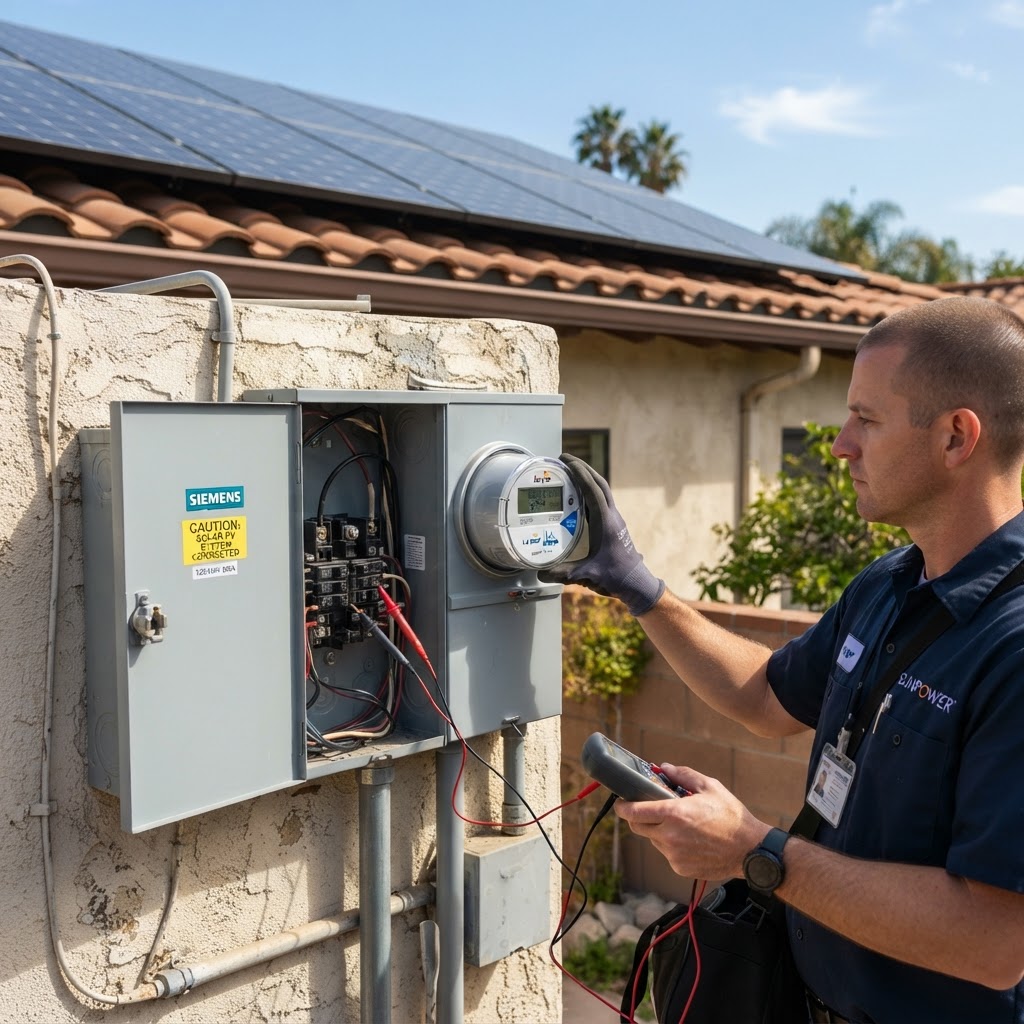
Our technicians use calibrated megger instruments to measure insulation resistance string by string, isolating the faulty section in most cases within 1–2 hours.
ground faultinverterGFDItroubleshooting
Share:

